
The building blocks of connected work.
JibeONE gives every module the same core capabilities: records, views, boards, pages, dashboards, workflows, collaboration, AI, and security. Teams can organize data, manage work, automate process, share context, and act faster without learning a different tool for every function.
Learn the patterns once. Use them everywhere.




Turn business data into an interactive workspace.
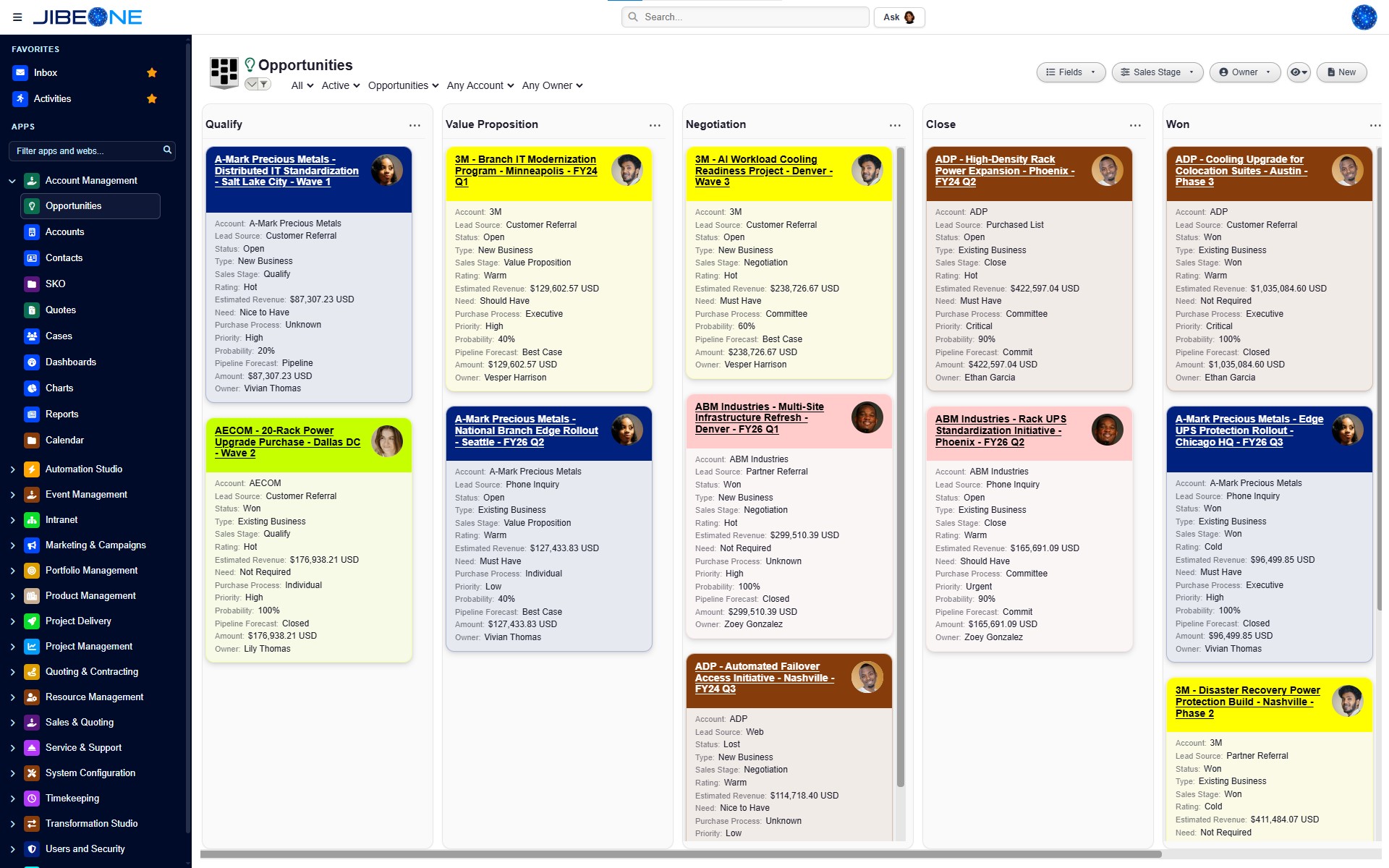
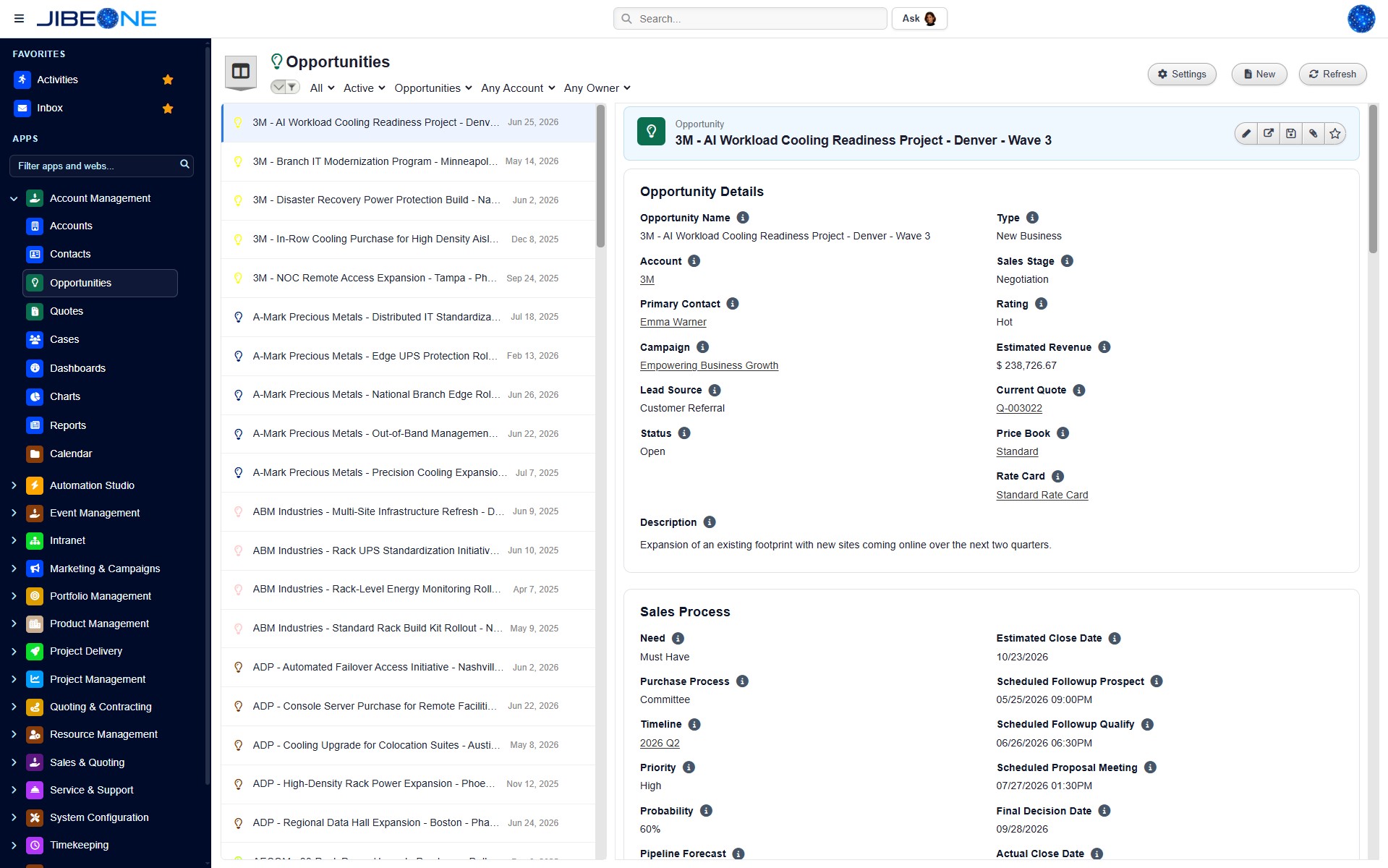
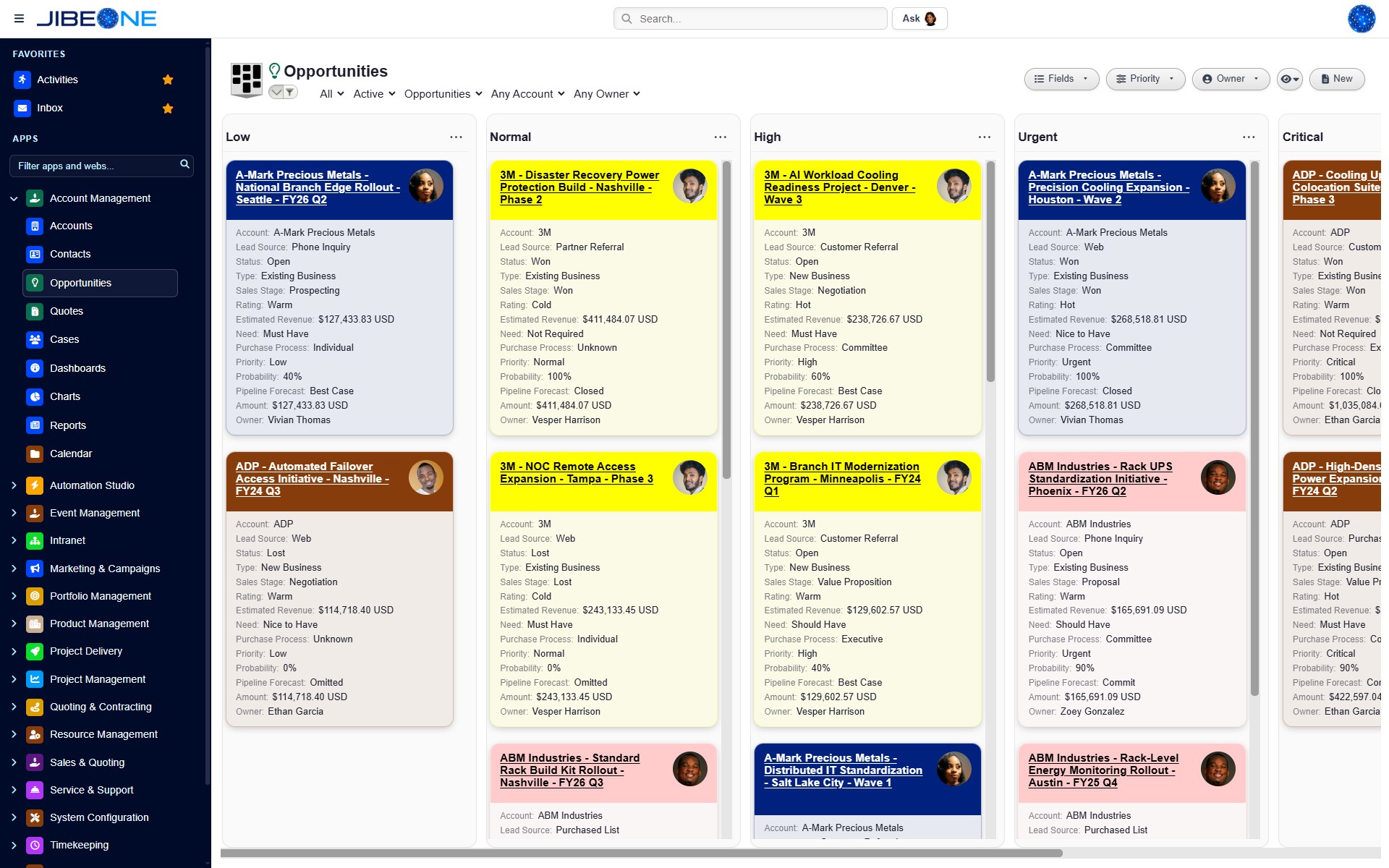
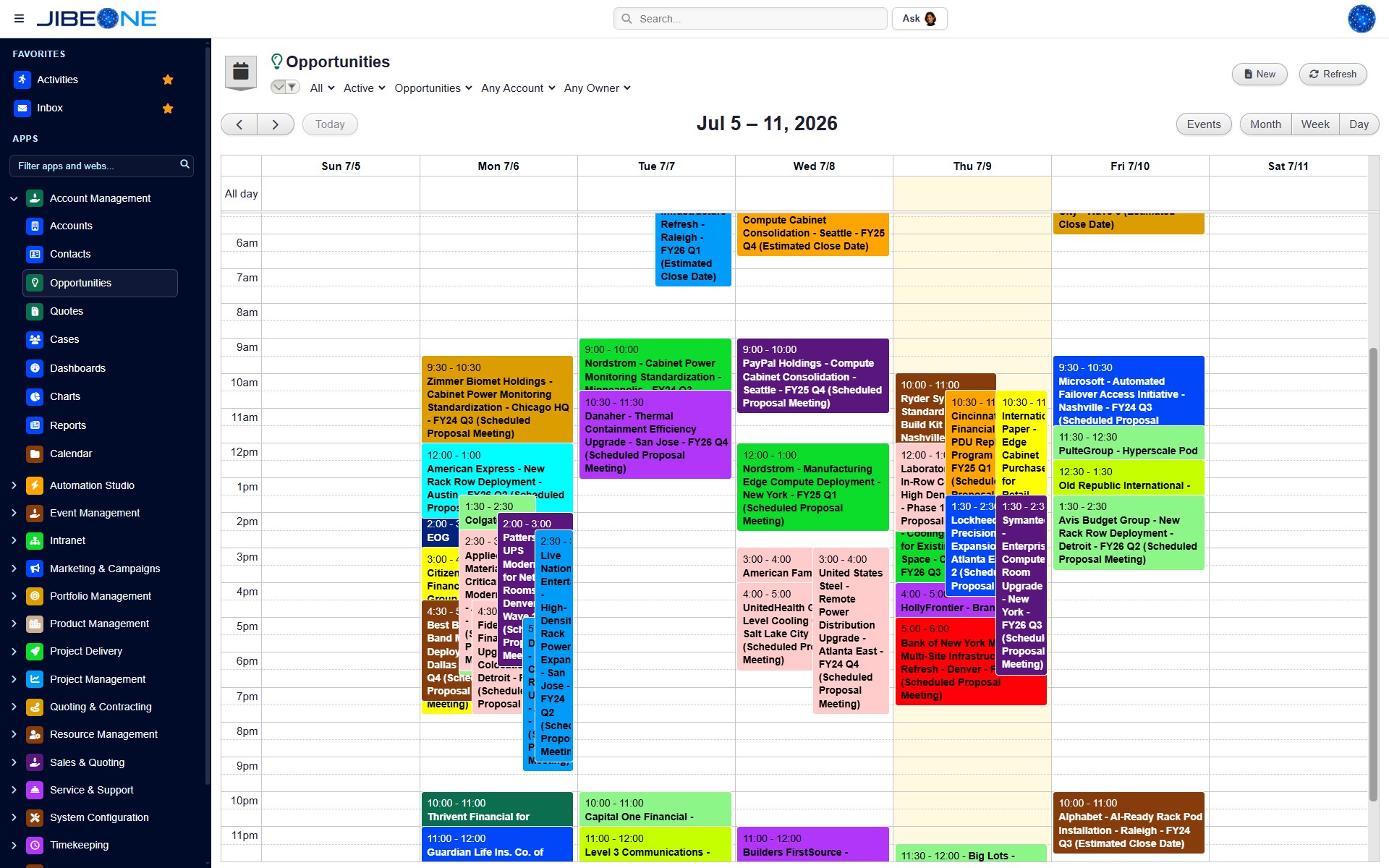
JibeONE gives teams visual ways to organize, prioritize, and move work forward. Use lists, boards, calendars, queues, and record views to manage accounts, opportunities, projects, cases, tasks, and custom objects in the format that fits the work.
- Kanban boards for pipeline, work status, cases, tasks, and delivery flow
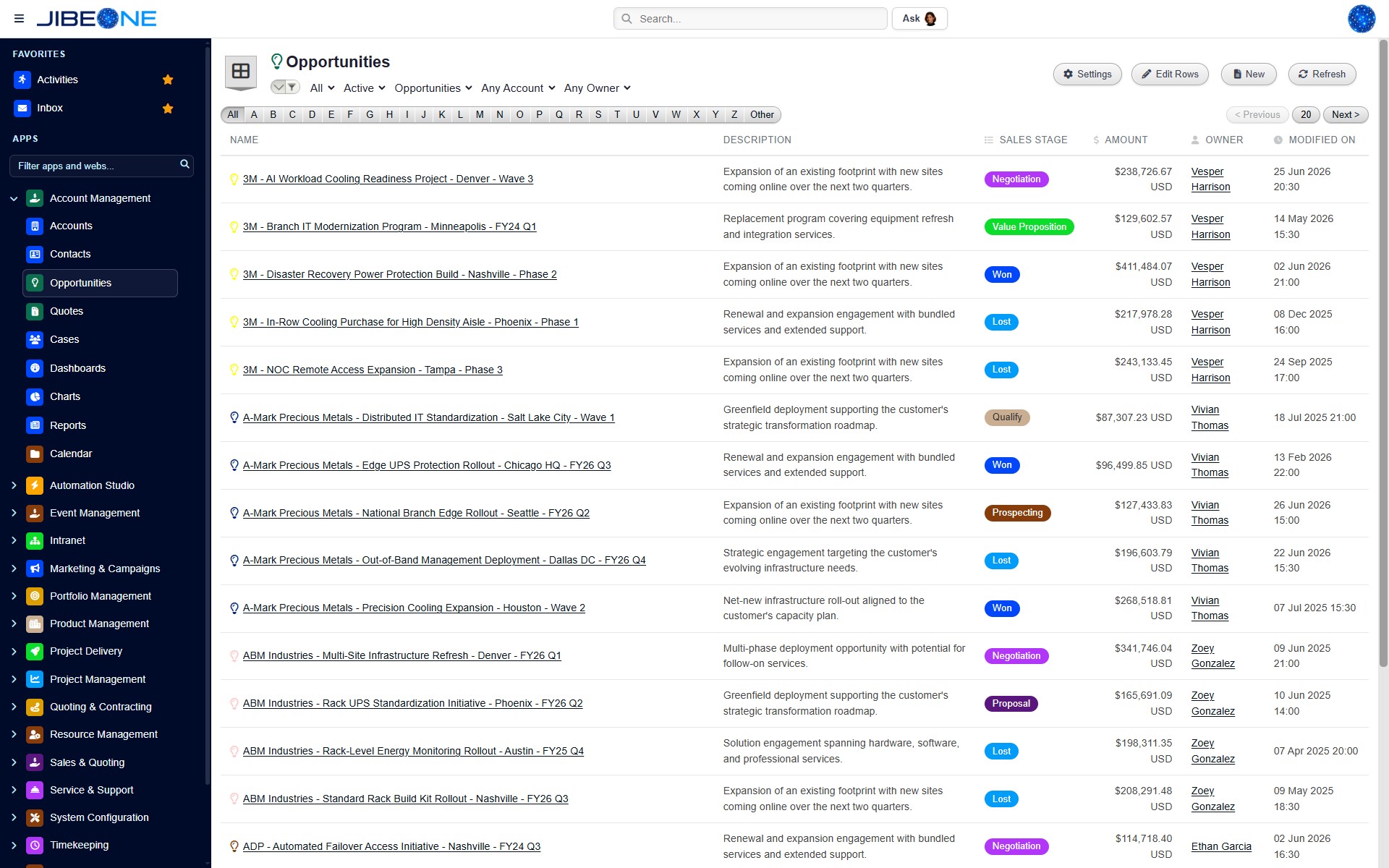
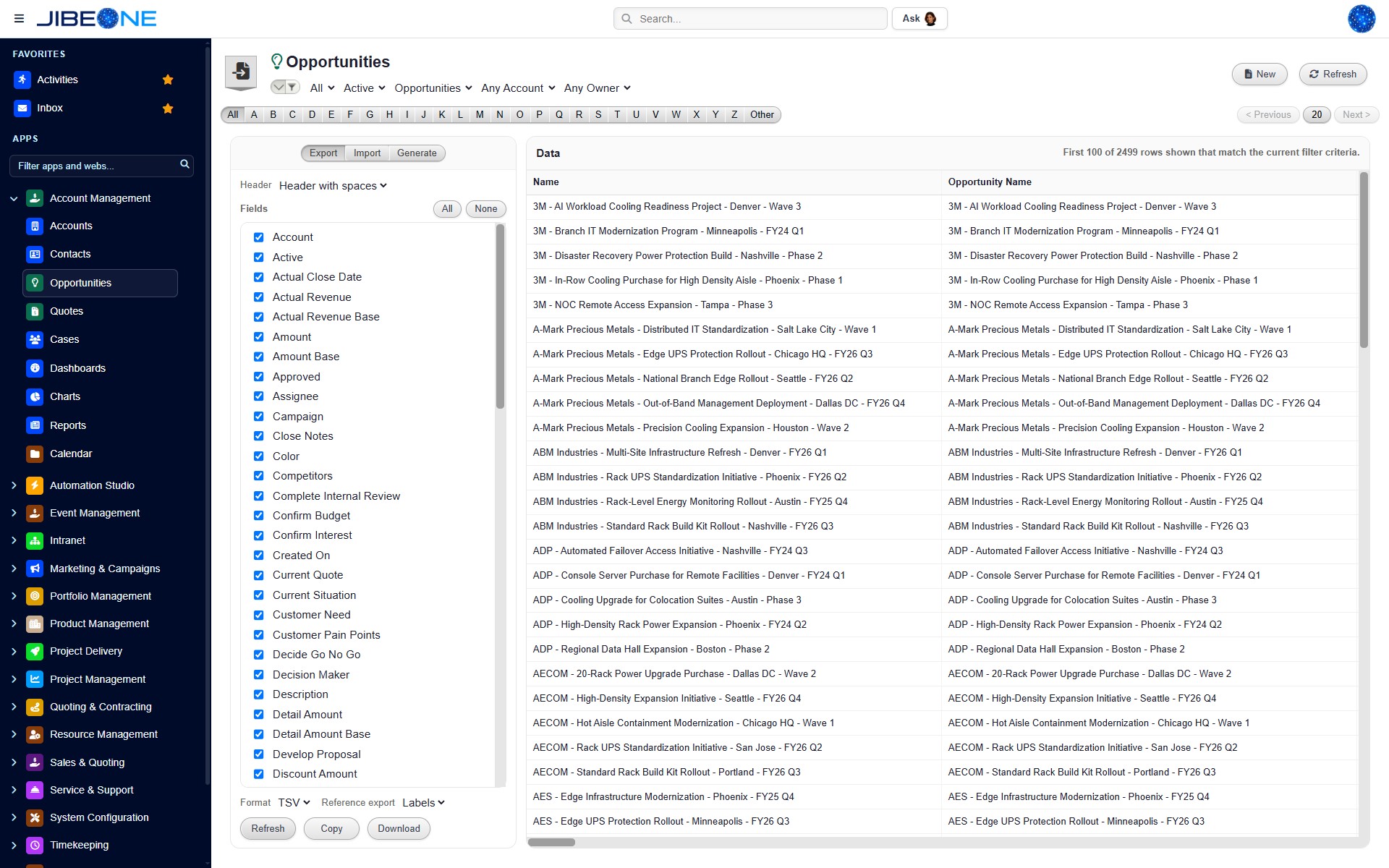
- Lists and saved views for filtering, sorting, and prioritizing records
- Record pages that bring fields, relationships, activity, and actions together
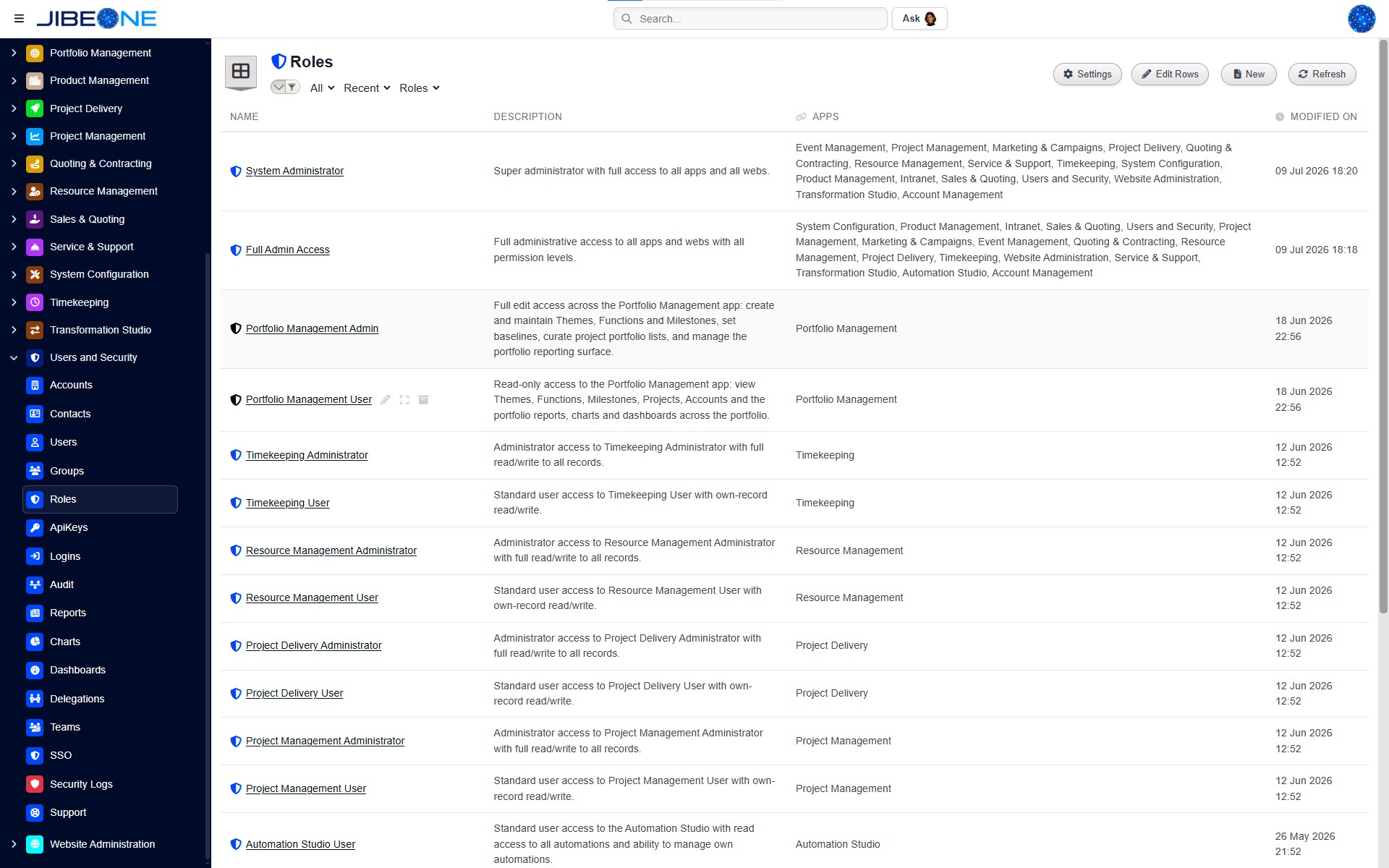
- Role-based views so each team sees what matters to them
Work with records the way the work demands
JibeONE records are not limited to one screen or one layout. Teams can review, triage, move, schedule, locate, and manage work through the view that fits the job.
See what is happening while the work is happening.
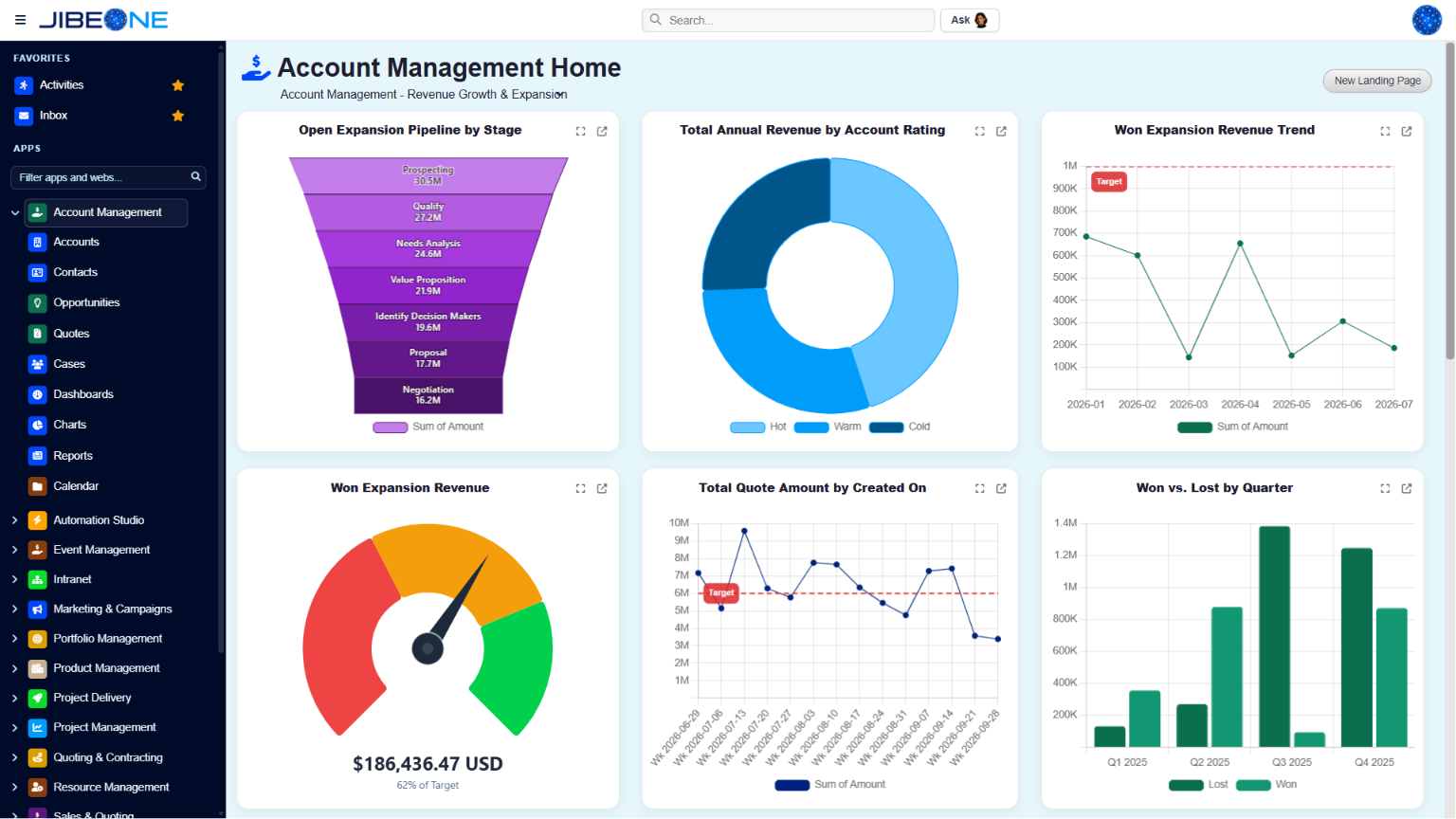
Dashboards, charts, reports, and rollups in JibeONE are built from the same records teams use every day. Leaders can track performance, risk, workload, customer health, and accountability without waiting for spreadsheet rollups or disconnected reporting cycles.
- Build dashboards from live records across modules
- Use charts, reports, and rollups to track performance and trends
- Monitor customer health, pipeline, service risk, workload, and execution
- Compare actual activity against targets, plans, and operating goals
- Give teams and leaders views that reflect their role, scope, and permissions
Keep work moving without relying on memory.
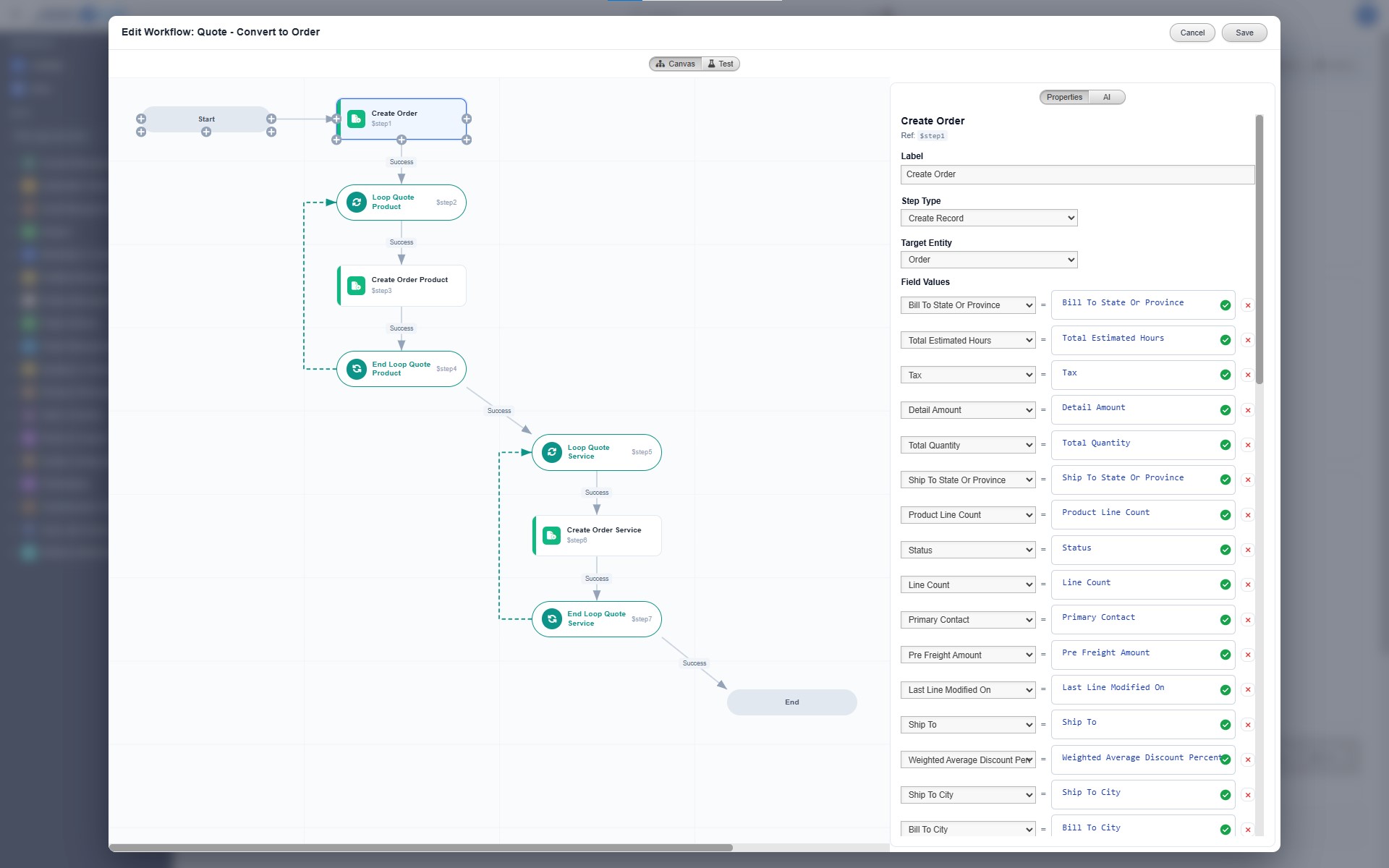
JibeONE helps teams turn repeatable work into repeatable motion. Validations, approvals, notifications, jobs, assignments, and automations keep records moving across teams without forcing every process into email, meetings, or manual follow-up.
- Approvals and validations
- Assignments and notifications
- Scheduled jobs and automation
- Audit trails and status changes
- Cross-team process support
AI that works where the business works.
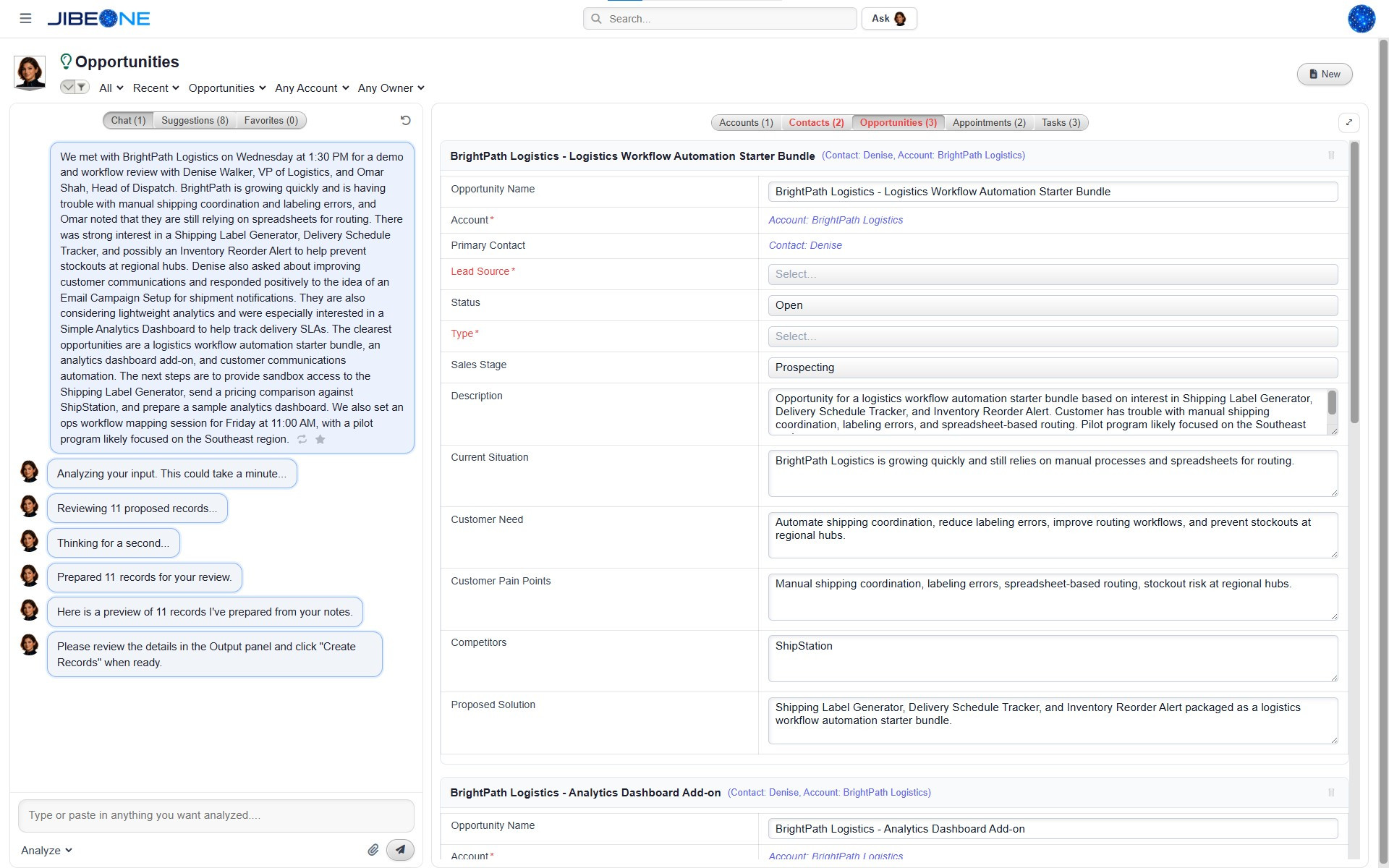
Jules does more than answer questions. She helps turn messy business input into structured work — converting notes into records, requirements into workflows, and live data into charts and reports. Because she works inside JibeONE’s records, permissions, and governance model, AI becomes part of the operating workspace instead of a tool beside it.
- Answer questions from governed business records and context
- Summarize activity, meetings, notes, and customer history
- Convert unstructured notes into records, tasks, and follow-ups
- Generate dashboards by combining best practices and your data
- Respect the same permissions as the rest of the platform
Keep the story with the work.
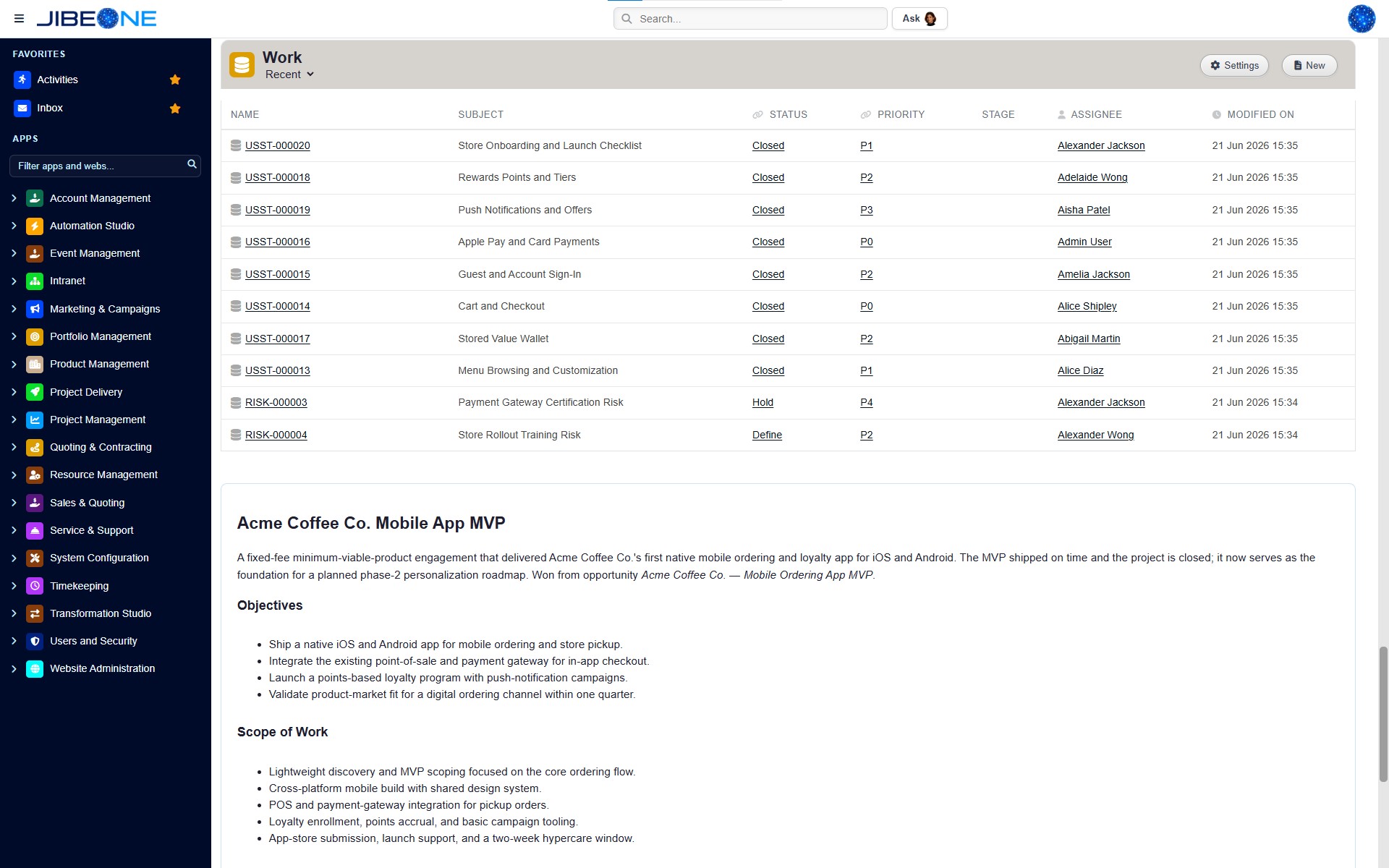
Records in JibeONE are more than database rows. They can carry pages, notes, documents, activity, decisions, discussions, related records, and history — so teams can understand the customer, project, case, or process without hunting across tools.
- Include rich document content directly onto record pages to create immersive understanding.
- Attach documents, notes, links, and working content to the records they support
- Track activity, history, changes, and decisions in the context of the customer, project, case, or process
- Give teams one place to understand status, background, next steps, and ownership
Governed by design.
JibeONE brings permissions, roles, audit trails, validation, and security controls into the same platform where work happens. Teams can move faster without giving up control over who can see, change, automate, or act on business data.
- Manage access with roles, permissions, and governed views
- Enforce business rules with validations, approvals, and audit trails
- Track changes, decisions, and activity in context
- Apply the same governance across records, workflows, dashboards, and AI
- SOC 2-oriented trust posture covering controls, evidence, operational discipline, and buyer assurance.
Native support for Cursor brings JibeONE to the developer
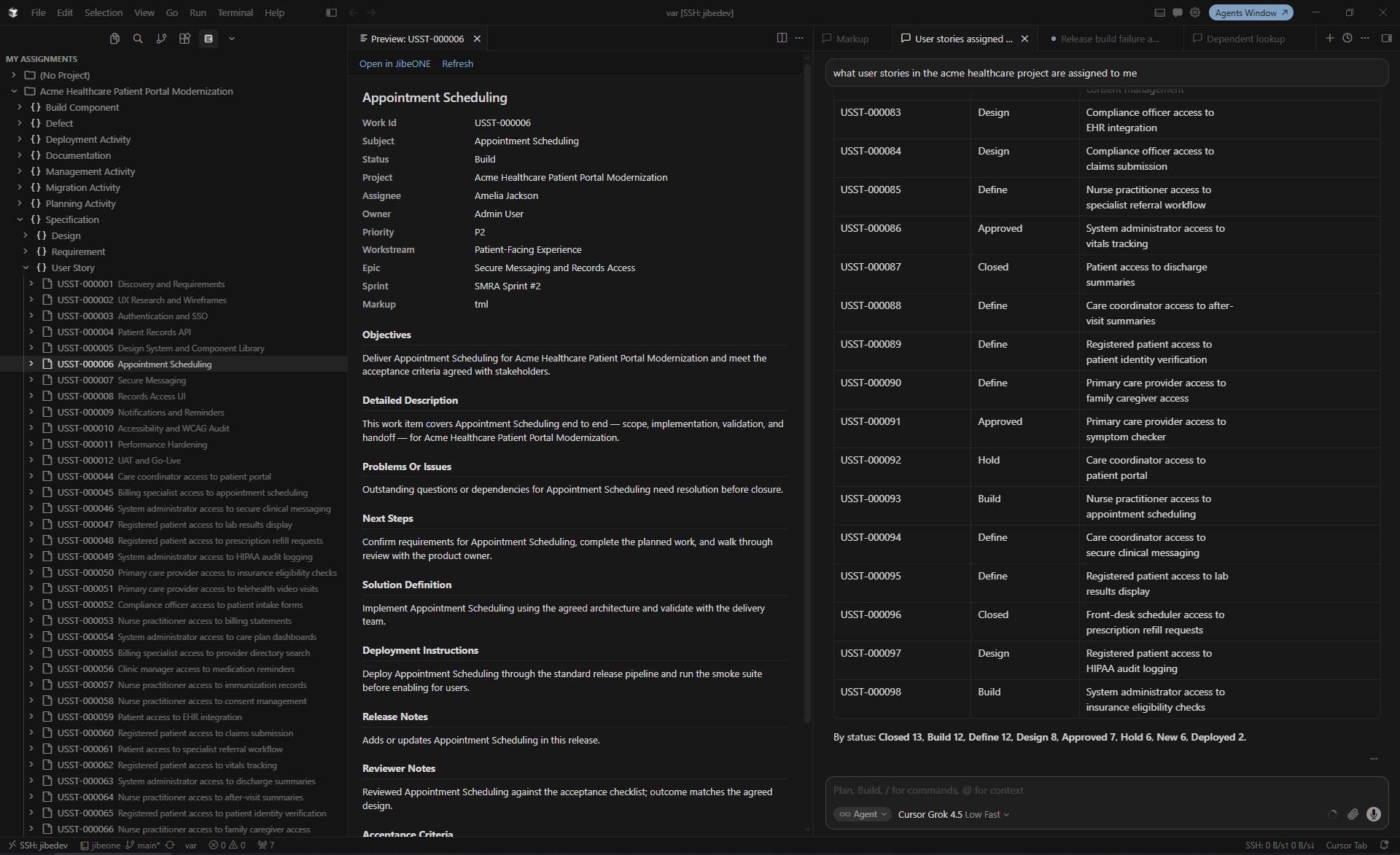
JibeONE brings assigned work, project context, requirements, user stories, defects, and release records directly into Cursor. Developers can review what they need, ask questions, preview records, and open JibeONE when deeper action is required — without leaving the development environment to hunt through a separate business system.
- Keep developers connected to the same operational record as the rest of the team
- View user stories, requirements, defects, and project records alongside the code
- Ask AI agents questions using live JibeONE project context
- Push plans and source commit information back into JibeONE as project assets
Want to see these capabilities in your operating model?
Tell us what you are trying to improve. We will show how JibeONE can model the work, connect the records, automate the bottlenecks, and give each role a clearer view of the business.